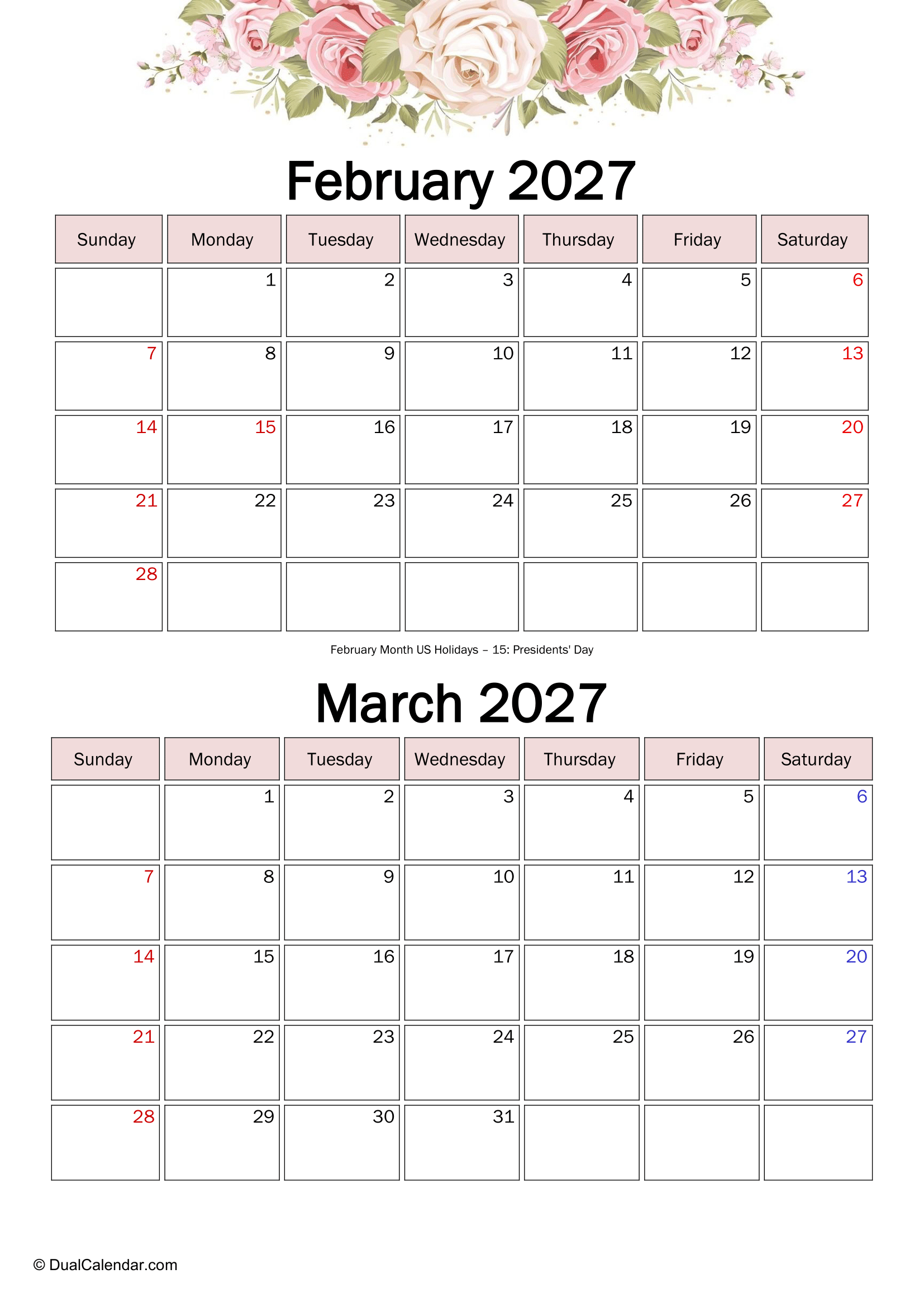
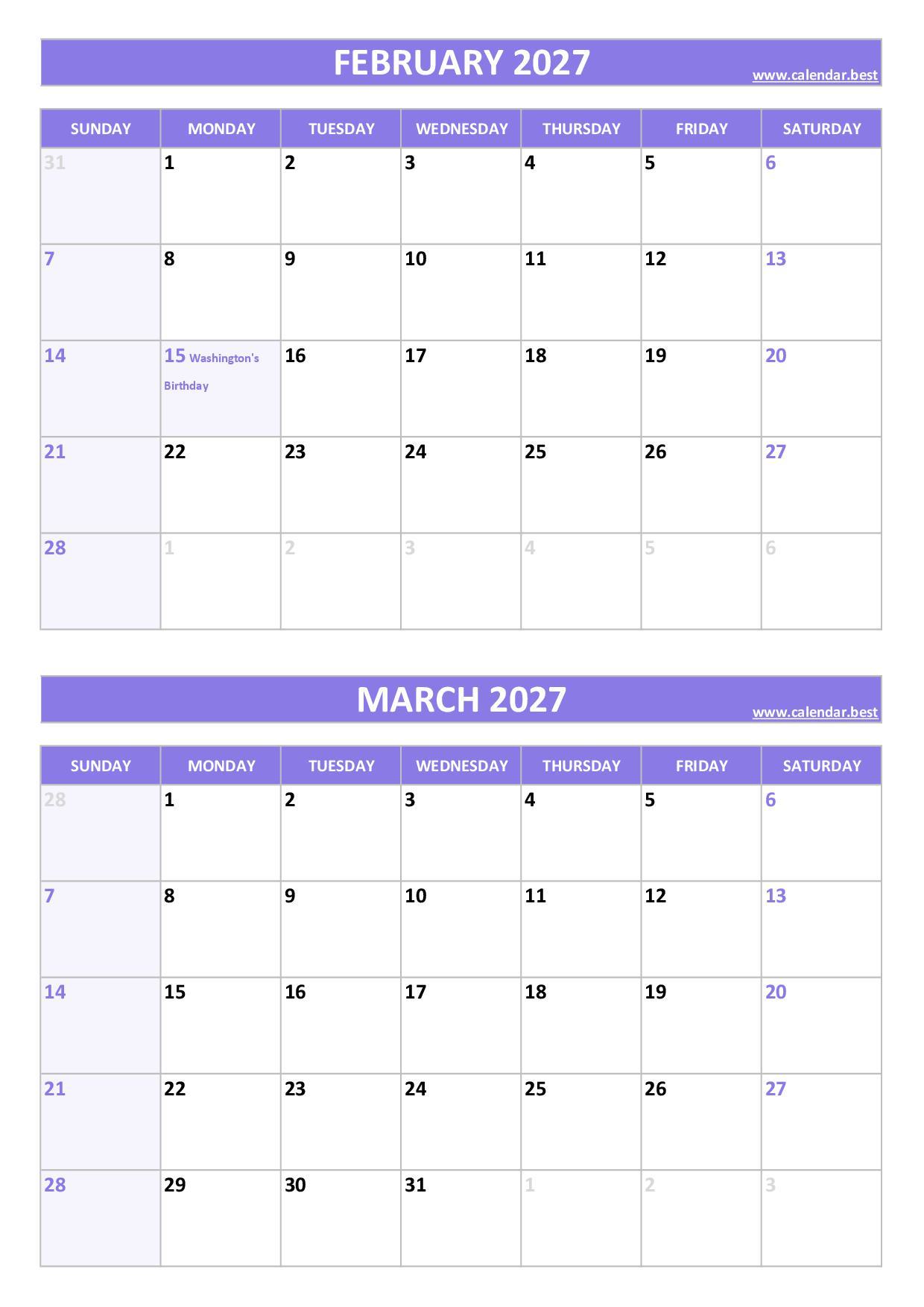
February and March 2027 form a useful planning window that bridges late winter and early spring, depending on location. A combined date reference helps track calendar dates, compare monthly planner pages, and follow seasonal timing in both hemispheres.
February And March 2027 Calendar With Seasons
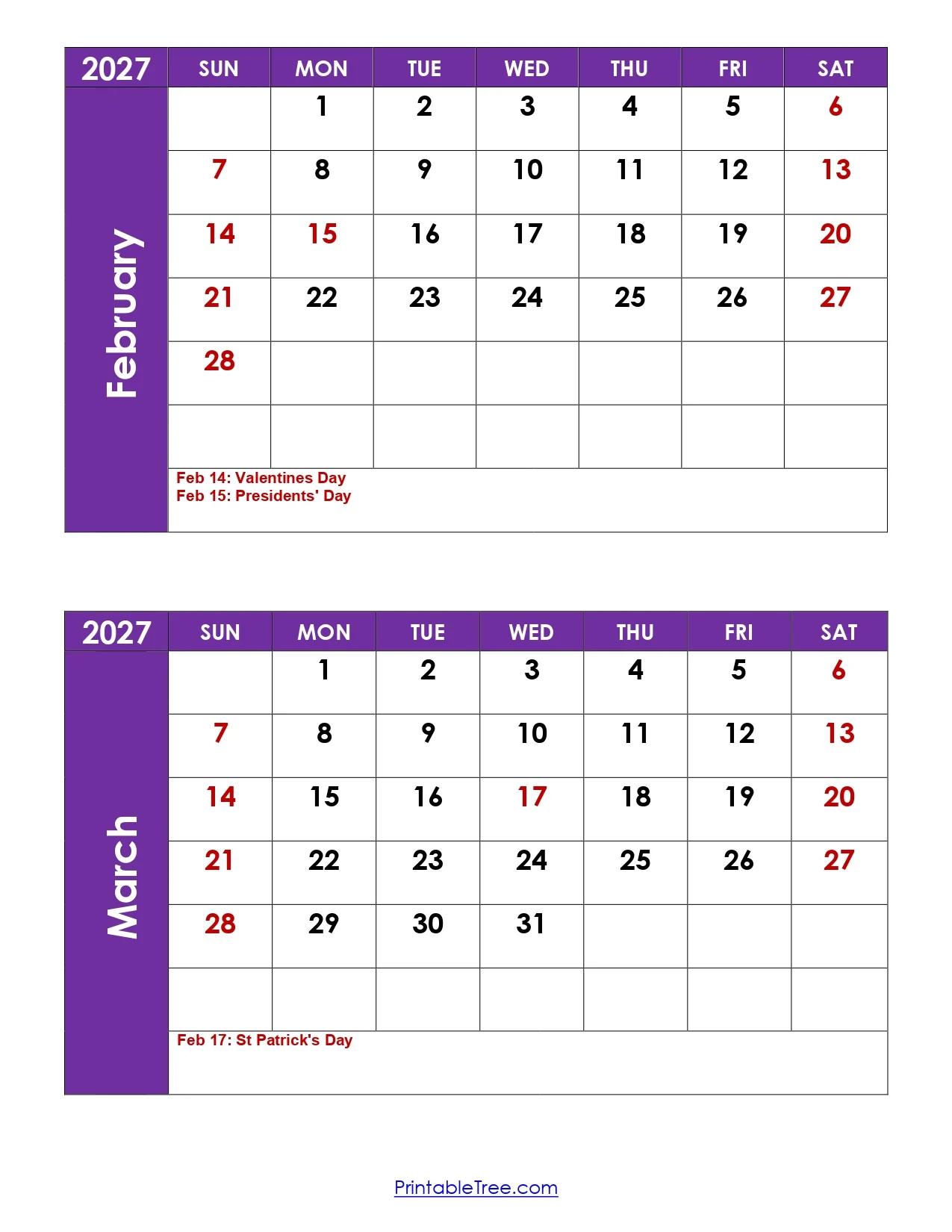
Using a February and March 2027 calendar together makes scheduling easier because the two months connect a shorter month with a longer one. February 2027 has 28 days, while March 2027 extends to 31 days, giving a clear two-month span for planning ahead.
Why a two-month calendar helps with date reference
A combined printable calendar is practical for anyone who needs a quick date reference across changing schedules. It shows how February ends and March begins, which helps with appointments, school timelines, travel plans, and seasonal activities that cross month boundaries.
This format also supports a monthly planner by keeping both months visible at once. That makes it easier to compare deadlines, map out events, and spot gaps in a schedule without switching between separate pages or screens.
Seasonal transition in the Northern Hemisphere
In the Northern Hemisphere, February 2027 sits in late winter, while March moves into early spring. The seasonal transition is gradual, so temperatures, daylight, and outdoor conditions may shift noticeably during the month rather than changing all at once.
For planning purposes, this means February often suits winter routines, while March may begin to support spring schedules, outdoor projects, and changing school or work activities. A calendar with seasons helps show that the two months belong to different parts of the same transition period.
Seasonal transition in the Southern Hemisphere
In the Southern Hemisphere, February 2027 falls in late summer, and March begins the move into early autumn. That seasonal shift can affect travel, clothing, events, and outdoor planning, especially where weather patterns change quickly between months.
Viewing February and March 2027 together gives a clearer date reference for this opposite seasonal pattern. The same calendar dates can mean very different conditions, so a seasonal calendar is useful for matching plans to local weather and daylight changes.
- Scheduling: Track appointments, deadlines, and recurring tasks across both months.
- Travel: Compare seasonal conditions before booking trips or outdoor routes.
- School: Follow term dates, breaks, and project timelines more easily.
- Events: Plan gatherings, sports, and community activities around seasonal transition periods.
- Seasonal work: Organize gardening, maintenance, or business tasks by month.
A February and March 2027 calendar works best as a practical planning tool because it combines date reference with seasonal context. That makes it easier to see late winter or early spring in one view, while also accounting for Southern Hemisphere timing and the shift into a new month.